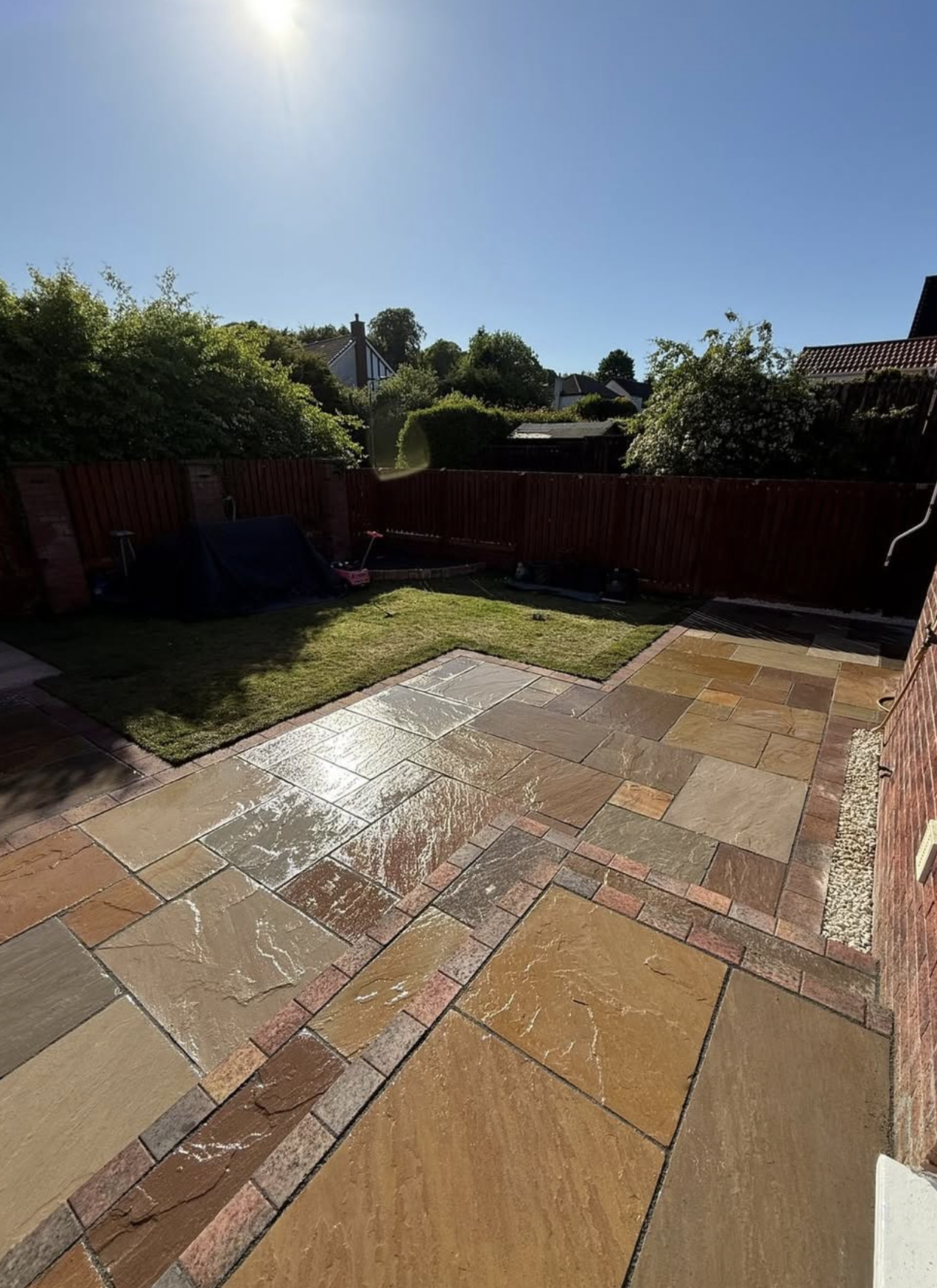
Winters aren’t kind to driveways — and Glasgow’s mix of freezing nights, heavy rain, and constant moisture is one of the toughest tests any surface will face. Yet many homeowners delay replacing their driveway until cracks, dips, or drainage issues become impossible to ignore.
Here’s the truth: driveway failures rarely happen overnight. They develop slowly — quietly — until winter exposes weaknesses that were forming for months or even years. By the time you see the obvious surface problems, the underlying structure may already be compromised.
As a specialist with years of experience installing and assessing driveways across Glasgow, I’ve seen the same pattern repeat over and over: early signs get missed, winter arrives, water freezes beneath the surface, and suddenly a small issue becomes a major — and expensive — repair.
To help you avoid that scenario, here are the five most reliable signs that you need a new driveway in Glasgow before the next Scottish winter hits.
1. Your Driveway Has Cracks That Get Bigger Every Winter
Cracks are the first and clearest warning sign that your driveway is nearing the end of its life. They form more frequently in Glasgow because the city experiences constant freeze–thaw cycles, high rainfall, and rapid temperature changes — all of which speed up structural damage. When water enters cracks and freezes, it expands by around 9%, forcing those cracks apart. Over time, repeated freezing and thawing widens the fractures and weakens the sub-base beneath the surface.
Hairline cracks are typically shallow and only affect the top layer of the driveway. Depending on the material and age of the surface, they can sometimes be repaired. Structural cracks, however, are a different matter. These widen over time, branch out, or run deep into the driveway, and often appear as long jagged lines, edges that begin to lift, cracks wider than 3–5mm, or grid-like cracking across the surface. These patterns signal that the foundation — the sub-base — has already been compromised.
Cracks become an urgent concern when you notice the same fractures reappearing after repairs, dips forming around the cracked areas, or water pooling inside them. At that point, it’s time to consider a full replacement before winter amplifies the damage further. Many homeowners searching for Driveway in Glasgow advice often ask whether cracks can simply be filled. The truth is straightforward: you can fill cracks, but you can’t fix a failing foundation.
2. Your Driveway Has Poor Drainage or Water Pooling
Drainage issues are one of the biggest contributors to early driveway failure in Glasgow, largely due to Scotland’s wet climate and constant exposure to moisture. Excess water can erode the sub-base, encourage moss and algae growth, trigger freeze–thaw cracking, and create safety hazards such as slippery surfaces during winter. A driveway that holds water, even in small puddles, will eventually break apart because it’s no longer level or able to drain efficiently.
Common signs of drainage failure include standing water after rain, which indicates the surface has lost its proper fall; water running toward your house, which can lead to damp foundations; channel drains overflowing during heavy rainfall; and driveway edges that appear to sink, signalling that water has infiltrated and weakened the structure. All of these are early warnings that the driveway is losing its integrity.
From a technical perspective, any healthy driveway relies on a stable sub-base, controlled compaction, a correct slope, and proper drainage channels. When water seeps into the sub-base, it washes away fine particles, creates voids, and leads to dips, soft spots, and accelerated frost heave during winter. These issues compound over time until sections of the driveway eventually collapse or become unsafe.
This becomes especially critical in the lead-up to winter. Standing water in September turns into expanding ice by December, making the damage far worse and often irreversible. That’s why drainage issues are one of the strongest indicators that you may need a new driveway in Glasgow before another harsh Scottish winter sets in.
3. Your Driveway Has Uneven Surfaces, Dips, or Sinking Areas
An uneven driveway is more than an eyesore — it’s often a sign of deeper structural issues beneath the surface. Driveways typically sink when the sub-base hasn’t been installed correctly, when the ground naturally shifts or settles, when water infiltrates and weakens the support layer, or when heavy vehicles exceed the load-bearing capacity of the surface. No material is immune; tarmac, concrete, block paving, and even resin can all sink if the foundation has been compromised.
There are several clear indicators of sub-base failure. Dips forming in the same areas every year, tyre ruts that become more pronounced over time, noticeable high and low spots underfoot, block paving joints separating, or driveway edges collapsing inward all point to underlying structural deterioration. Once these signs appear, winter conditions will only intensify the damage. When ice fills the gaps and expands, the sinking accelerates — often rapidly.
Resin driveways are especially vulnerable in Glasgow. Although resin-bound surfaces are admired for their permeability and modern appearance, they rely heavily on a perfectly prepared sub-base. In a city with high rainfall, any installation error becomes obvious within the first winter as water penetrates beneath the surface and softens the layers below.
While minor settling can sometimes be repaired, widespread sinking, repeated depressions, or structural dips appearing year after year indicate that the driveway has reached the end of its lifespan. At that stage, replacement becomes the most reliable and long-term solution.
4. Your Driveway Is Over 20 Years Old (or Poorly Installed)
Even the best driveways have a natural lifespan, and Glasgow’s demanding climate often shortens it. In general, tarmac driveways last around 15–20 years, concrete can reach 20–30 years, block paving typically endures for 20–25 years, and resin-bound surfaces usually offer 15–20 years of reliable use. However, Glasgow’s constant freeze–thaw cycles, frequent rainfall, persistent dampness, and moss growth can all reduce these lifespans significantly.
As a driveway ages, winter accelerates its decline. Older surfaces become brittle, porous, and far more susceptible to cracking, erosion, fading, drainage problems, and general breakage. At this stage, repairs tend to be short-lived because the structure beneath the surface is already deteriorating. Once these age-related issues appear, the driveway simply cannot withstand another Scottish winter without the risk of major, ongoing damage.
Poor installation can shorten a driveway’s life even further. Many driveways installed in the early 2000s — particularly budget block paving or quick-lay tarmac jobs — were not constructed to modern standards. Common faults include thin or unstable sub-bases, a lack of geotextile membrane, poor compaction, low-quality edging, incorrect fall (slope), and cheap materials. Homeowners often assume winter damage is unavoidable, but that’s not the case. A driveway built professionally, with proper foundations and drainage, can withstand Glasgow winters for decades with minimal issues.
5. Your Driveway Is Causing Kerb Appeal, Safety, or Structural Issues
A driveway plays a major role in your home’s first impression, overall safety, and even its property value. When kerb appeal drops, so does perceived value. Estate agents in Glasgow regularly report that a new driveway can increase the perceived value of a property by 5–10%, particularly in sought-after areas such as Shawlands, Bearsden, Giffnock, Newton Mearns, and the West End. On the other hand, a tired, cracked, or moss-covered driveway can instantly age a home and make it look poorly maintained.
Safety concerns are another strong indicator that it may be time for a replacement. Slippery, moss-covered patches, loose stones that create tripping hazards, block paving that shifts underfoot, edges that break apart, or icy areas that form every winter all present risks — especially when temperatures drop. Even minor hazards can quickly become dangerous in Scotland’s cold, wet climate.
In more serious cases, driveway problems can begin affecting the home’s structure itself. Water running toward the property, damp patches near the front wall, erosion of the soil, or movement near retaining walls all signal that the driveway is no longer directing water safely away from the house. These issues must be addressed before winter makes them significantly worse.
How to Know Whether You Need Repairs or a Full Replacement
Not every driveway problem requires a full replacement, and understanding the difference can save you both time and money. Minor issues can often be repaired, while more serious or recurring problems indicate deeper structural failure. Repairs are usually sufficient when cracks are small and isolated, drainage concerns are only surface-level, moss growth is purely cosmetic, sinking is limited to a single small area, and the driveway remains structurally sound overall. In these cases, targeted fixes can extend the life of the surface for several more years.
A full replacement becomes necessary when cracks begin spreading across the driveway, multiple dips or soft spots develop, drainage repeatedly fails, or previous surface repairs stop holding. Age is also a key factor; driveways over 15–20 years old typically start showing systemic wear that repairs can no longer resolve. Additionally, if water is flowing toward your home or causing damp issues, a new driveway is essential to protect the property’s structure.
If you’re unsure which route to take, it’s always best to consult a qualified driveway specialist in Glasgow. They can assess the sub-base, drainage performance, overall fall, and the general condition of your surface to determine whether repairs will suffice or whether a complete replacement is the safer long-term option.
Choosing the Right New Driveway Before Winter
Top Options in Glasgow
-
Tarmac
Affordable, durable, weather-resistant, ideal for large areas.
-
Block Paving
Highly decorative, long-lasting, easy to repair.
-
Resin-Bound
Modern, permeable, visually striking — but only when installed properly.
-
Concrete
Strong, low maintenance, excellent for long-term durability.
Winter Installation Tips
-
Early autumn is the best time to replace a driveway before temperatures drop.
-
Resin and tarmac need temperatures above certain thresholds to cure properly.
-
Always request a full excavation and new sub-base for maximum longevity.
FAQ: Driveway Replacement in Glasgow
How long does a new driveway last in Glasgow?
A professionally installed driveway can last 15–30 years depending on the material and climate exposure.
Can winter damage a driveway beyond repair?
Yes. Freeze–thaw cycles are one of the biggest causes of structural failure.
When is the best time of year to replace a driveway in Glasgow?
Late spring to early autumn. Resin and tarmac require mild weather for optimal curing.
How much does a new driveway cost?
Costs vary by material, size, and excavation requirements. Most Glasgow installations range from a few thousand pounds upward.
Can I repair a sinking driveway?
Localised sinking may be repairable, but widespread sinking usually requires a replacement.
Why does my driveway get moss and algae every winter?
Glasgow’s damp climate encourages growth. Poor drainage makes it worse.
Don’t Let Another Winter Ruin Your Driveway
If your driveway is cracking, sinking, holding water, or simply past its best, now is the time to act — before Glasgow’s winter weather makes the damage worse and the cost higher.
A new driveway doesn’t just improve kerb appeal.
It protects your home, prevents structural damage, and ensures safety for your family all year round.
If you’ve recognised one or more of these signs, the safest next step is to book a professional driveway assessment. Early action can save you thousands — and guarantee your driveway lasts for decades.