For many Glasgow homeowners, installing a driveway feels like a straightforward home improvement. You own the property. You need off-street parking. You’ve seen neighbours do it. So surely you can just go ahead — right?
This assumption is where people get caught out.
Every year, homeowners across Glasgow are forced to redo driveways, submit retrospective applications, or deal with enforcement notices because they misunderstood one critical issue: whether they actually had permission to build a driveway in the first place.
The rules are not impossible to navigate — but they are specific, technical, and often misunderstood. This guide cuts through the confusion and explains exactly how planning permission works for driveways in Glasgow, when it’s required, when it’s not, and what you must do to stay compliant.
If you’re planning a new driveway, altering an existing one, or even just thinking ahead, this is the information you need before a single slab is laid.
Who Sets the Rules in Glasgow?
Driveway planning and access rules are governed by Glasgow City Council, operating under Scottish planning law and national permitted development rights. However, local policies, conservation area designations, and roads authority requirements often add extra layers of control. That’s why advice that applies in England, or even elsewhere in Scotland, doesn’t always translate cleanly to Glasgow.
When Planning Permission Is NOT Required
In Glasgow, planning permission is usually not required to build or replace a driveway if all of the following apply:
1. The surface is permeable
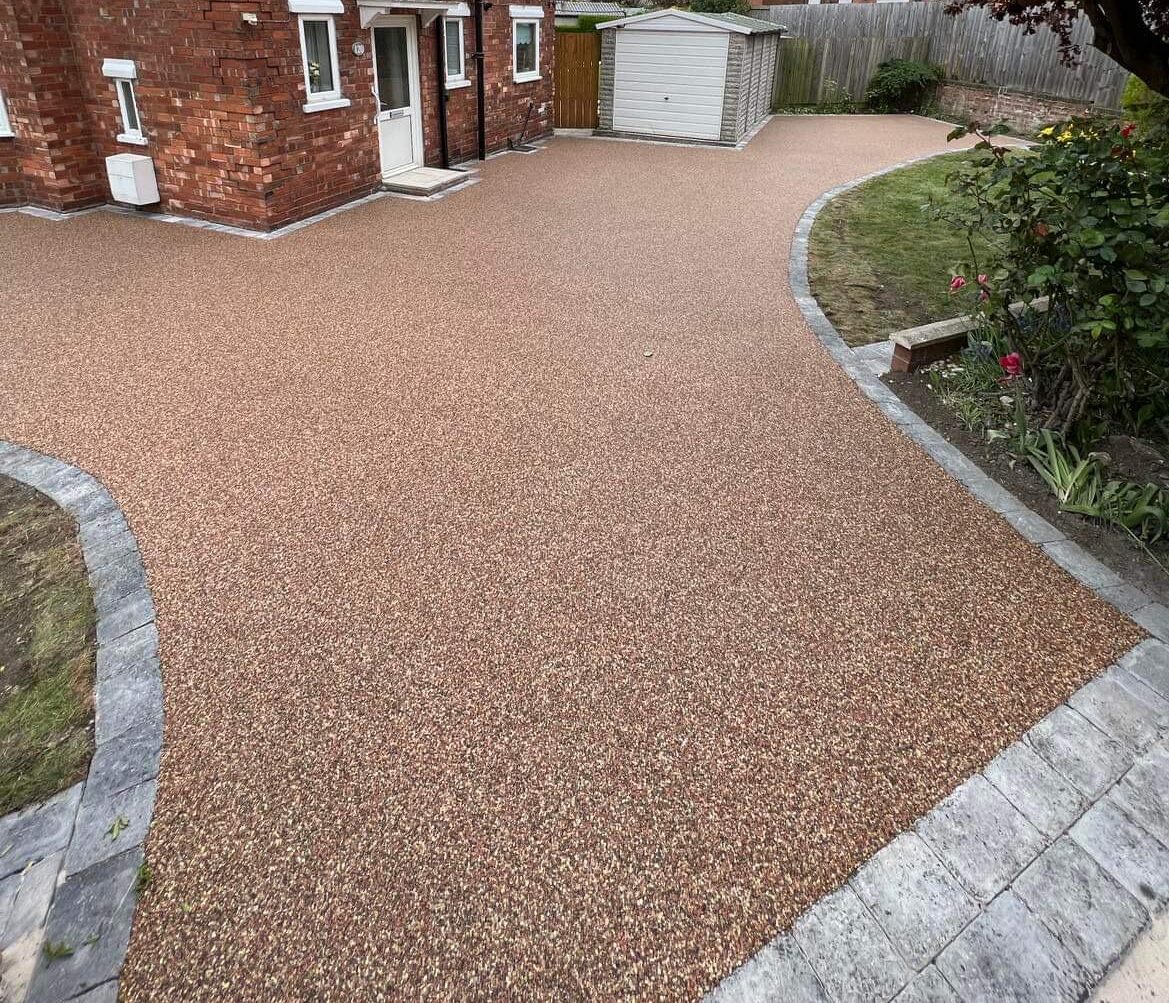
If the driveway uses a permeable surface, such as resin-bound gravel, permeable block paving, or porous concrete, and allows water to drain naturally into the ground, it typically falls under permitted development. This is a major factor. Non-permeable surfaces are where many applications become necessary.
2. Surface water does not drain onto the road
Even permeable driveways must be designed so water does not run onto the pavement or road. Any design that increases surface water discharge onto public land can trigger refusal or enforcement.
3. You are not altering the kerb or pavement
If the project does not involve creating or modifying a vehicle crossing (dropped kerb), planning permission may not be required — though roads consent might still be.
4. The property is not in a conservation area
Many parts of Glasgow fall under conservation area controls. In these zones, permitted development rights may be restricted or removed entirely.
5. The driveway is within your boundary
Any work outside your legal boundary changes the approval requirements. If all these conditions are met, you may not need formal permission to build a driveway — but that does not mean you can ignore technical standards.
Why Professional Guidance Matters
A professionally planned driveway:
- Complies with regulations
- Avoids enforcement risk
- Protects property value
- Handles drainage correctly
- Passes scrutiny during resale
Cheap or rushed work often ends up being the most expensive option.
Thinking about a driveway project in glasgow?
If you want expert advice on permissions, access approvals, drainage compliance, and driveway design — speak to professionals who understand Glasgow’s planning landscape inside out.