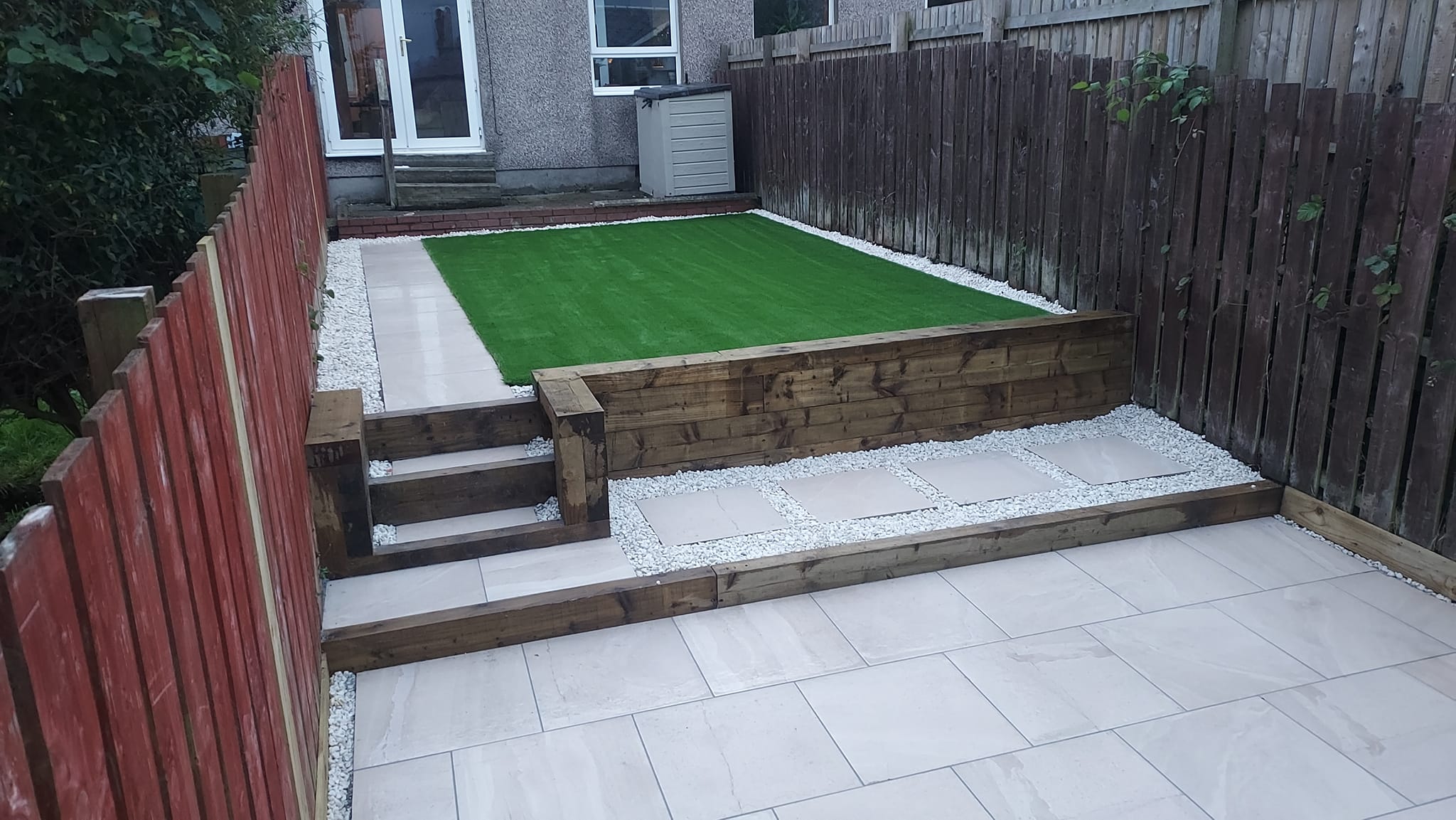
Front gardens in Glasgow present a unique design challenge. Space is tight. Streets are narrow. Parking is essential. And yet homeowners still want a garden that feels welcoming, stylish, and in harmony with the character of their property.
The best small front gardens aren’t created by choosing between a driveway or a garden. They’re created by combining both — strategically, proportionally, and with a plan.
When driveway and garden design work together, the result is a functional, attractive, and high-value entrance that transforms the kerb appeal of your home. When they don’t, you end up with exactly what you see on many Glasgow streets: a slab of tarmac squeezed up to the front door, no greenery, and a space that feels far smaller than it actually is.
As a company specialising in landscape and driveway design across Glasgow, we’ve worked on hundreds of properties — from tight Southside terraces to traditional West End townhouses — and the principles you’ll learn here apply to them all.
Why Combining Driveway and Garden Design Works Better in Small Spaces
1. Driveways Without Garden Structure Feel Bare and Lifeless
A driveway alone is purely functional. Without soft landscaping, boundaries, sightlines, or greenery, the space can feel harsh. This is especially true in small front gardens where there is no visual “relief”.
When designed well, even a modest planting area can soften the look of paving, create a sense of depth, and make the entrance feel welcoming rather than industrial.
2. Gardens Without Driveway Planning Lead to Awkward, Inefficient Parking
On the other side of the spectrum, homeowners often start with planting ideas and only then consider where the car will go. The result? Tight manoeuvring space, overrun flower beds, or mud on the pavement.
Driveway and garden design must be planned together so that plants don’t block access, gates can open freely, and cars can enter and exit without stress.
3. A Combined Design Increases Property Value — Massively
Estate agents across Glasgow consistently highlight three factors that boost kerb appeal: off-street parking, attractive frontage, and ow-maintenance landscaping. A cohesive design checks all three boxes. Buyers see a well-designed entrance that makes the house look more expensive.
How to Combine Driveway and Garden Design: The Complete Framework
1. Start With a Functional Layout
Most mistakes in driveway and garden design happen because homeowners begin by choosing paving colours or plant lists rather than considering how the space actually needs to function. A front garden is, above all, a practical area, and the layout should be planned with everyday use in mind. Before thinking about aesthetics, consider:
- Where the car will enter and exit;
- Whether doors and boots can open freely;
- Whether any turning space is needed;
- How many bins must be accommodated; and
- Whether there is a clear, safe route to the front door.
Only once these essentials are mapped out should design features and materials come into play. The Golden Rule: plan the car movement first. For small Glasgow gardens, ease of access matters more than aesthetics. Two standard layout options work best:
Option 1: Straight-In Driveway Layout. Ideal for narrow plots. Creates a direct parking space and leaves side borders for planting.
Option 2: L-Shaped or Side Parking Layout. Better for slightly wider gardens. Allows a garden “zone” separate from the parking area.
Tip: Avoid squeezing the car right up to the house wall. Even a 30–40cm planting strip dramatically softens the façade and prevents splashback on brickwork.
2. Balance Hard Landscaping and Soft Landscaping
The biggest design failure in Glasgow front gardens is the assumption that small space = no plants. In reality, small front gardens need greenery even more.
| Hard Landscaping Components | Soft Landscaping Components |
|---|---|
| Driveway paving | Shrubs |
| Paths | Low evergreens |
| Steps | Ornamental grasses |
| Raised beds | Ground-cover plants |
| Retaining walls | Feature topiary |
| Edging | Seasonal colour accents |
| Lighting |
For most small front gardens, 60–70% hard landscaping + 30–40% planting = the most visually balanced and low-maintenance design. This ratio still allows a full driveway while avoiding the “all paving” look.
3. Choose Driveway Materials That Complement Your Garden Design
Your material choice affects drainage, maintenance, aesthetics, and cost. Here’s how they perform in small Glasgow front gardens.
| Material | Pros | Cons | Best Paired With |
|---|---|---|---|
| Resin Bound Driveways |
|
|
Modern planting (grasses, evergreen balls, architectural shrubs). |
| Block Paving |
|
|
Traditional front gardens, hedging, symmetrical layouts. |
| Porcelain or Natural Stone |
|
|
Minimalist planting, clean lines, architectural lighting. |
4. Use Planting to Shape Space and Enhance Privacy
Planting is one of the most powerful tools in driveway and garden design, especially in small Glasgow front gardens where space is limited and every element must work hard. Even the tiniest planting areas can transform the overall feel of the space by adding structure, softness, colour, and depth.
Thoughtfully selected shrubs, evergreens, and architectural plants help shape the layout, guide movement, and create natural boundaries that make the garden feel more intentional and inviting.
Well-placed planting can also enhance privacy, shielding windows or seating areas from the street without overwhelming the limited footprint. By using strategic combinations of height, texture, and form, you can soften hard landscaping, frame views, and create a sense of enclosure that turns a compact frontage into a welcoming, elegant entrance.
5. Integrate Pathways and Access Routes
Many homeowners add a path to their driveway as an afterthought, often squeezing it into whatever space is left. This usually results in awkward lines, inefficient layouts, and areas of wasted space that could have been utilised better.
A professionally designed driveway and garden layout, however, begins by considering how people actually move through the space. This includes planning the cleanest, most direct route from the pavement to the front door, positioning steps correctly on sloped plots, ensuring bins can be moved easily, and providing a safe, non-slip access route for deliveries during winter. Lighting placement is also essential, both for safety and for enhancing the overall appearance of the front garden at night.
Pro Tip: Use Contrasting Materials
Choosing a different surface for the path ensures the garden doesn’t look like one continuous driveway. This contrast helps define movement areas and adds architectural interest. Popular combinations include porcelain paths paired with resin driveways, block-paved paths set alongside gravel planting beds, or natural stone paths edged with steel next to resin or block paving. These pairings not only elevate visual appeal but also improve the clarity and flow of the design.
6. Manage Drainage Carefully — Especially in Glasgow
With Glasgow rainfall averaging over 170 days a year, drainage is non-negotiable.
Essential components of a professional driveway and garden design:
-
Permeable paving or resin
-
A well-engineered sub-base
-
ACO channels or linear drains
-
Correct falls (gradients)
-
Soakaways or gravel trenches where required
Never let water run towards the house. Proper drainage protects your foundations and stops winter ice forming on paths.
7. Use Lighting to Make Small Gardens Look Bigger
Good lighting isn’t decoration — it’s an architectural tool. Lighting helps:
-
Guide visitors safely
-
Highlight planting structure
-
Make the frontage look premium
-
Add nighttime kerb appeal
Soft, warm lighting avoids harsh shadows and enhances natural materials.
A Small Glasgow Front Garden Can Be Beautiful and Practical
With a thoughtful approach to driveway and garden design, even the smallest Glasgow front gardens can become functional, elegant, low-maintenance, high-value, and a welcoming extension of your home. If you’re ready to transform your own front garden into a professionally designed, beautifully balanced space that delivers both parking and kerb appeal, we’d be delighted to help.
Get in touch today for a consultation and bespoke design plan.