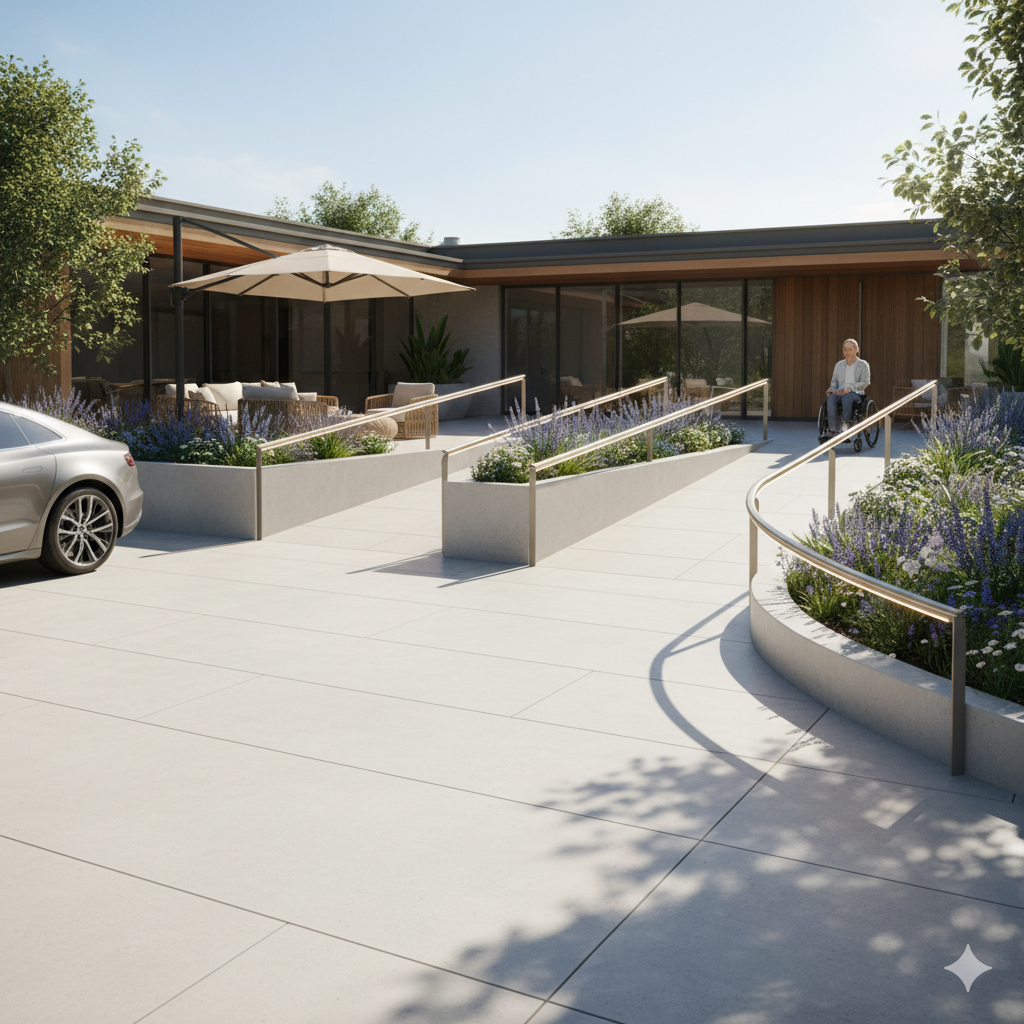
Designing an outdoor space that’s both beautiful and functional is rewarding, but true excellence comes from making it accessible to everyone. Whether it’s a family member using a wheelchair, someone with limited mobility, or simply ensuring your garden is future-proof as you age, an accessible outdoor design can completely transform how you enjoy your home.
At Glesga Garden Guy, we believe accessibility and design should go hand in hand. Your driveway and patio can be stylish, practical, and welcoming — all at once. Here’s how thoughtful design and professional installation can make that happen.
The Importance of Accessibility in Outdoor Spaces
An accessible driveway or patio isn’t just about meeting a need; it’s about creating freedom. When outdoor spaces are easy to navigate, they encourage independence, reduce the risk of falls, and make everyday activities more enjoyable.
Think about the simple pleasure of stepping outside with a cup of tea, welcoming guests to your door, or gardening without barriers. For many people, uneven paving, narrow paths, and steep gradients can turn those everyday moments into challenges.
By integrating accessibility early in the design process, you can ensure your outdoor areas remain safe, functional, and inclusive for years to come — without sacrificing beauty or character.
Planning Your Accessible Driveway
Creating a truly accessible driveway starts with good planning and a solid understanding of the site. Every detail matters — from slope angles and drainage to the materials you choose.
-
Surface Materials: Choose smooth, firm, non-slip materials such as resin bound gravel, textured concrete, or block paving with narrow joints. These surfaces provide reliable traction for wheelchairs, mobility scooters, and walking frames.
-
Slope and Gradient: A gentle slope makes movement easier and safer. Ideally, the gradient should not exceed 1:15 (that’s a 1-metre rise over 15 metres of length). Gradual inclines help prevent strain and make your driveway accessible to all.
-
Width and Turning Space: Leave enough space for easy turning — at least 1.2 to 1.5 metres wide for standard paths, and wider if vehicles share the space.
A driveway designed with accessibility in mind also improves day-to-day usability for everyone — whether you’re unloading shopping, parking, or welcoming visitors.
Designing Patios
Patios are the heart of most gardens — a place for dining, relaxing, and spending time with loved ones. For them to be accessible, they need to blend practicality with comfort.
-
Level Access: Ensure the patio surface sits flush with indoor thresholds or use linear drains for smooth transitions between house and garden.
-
Ample Space: Leave generous space for movement, especially around seating or planters. This makes it easy for wheelchair users to move around without restriction.
-
Surface Texture: Avoid uneven cobbles or rough textures that can catch wheels or cause trips. Instead, opt for slip-resistant materials that feel stable underfoot even when wet.
-
Lighting and Visibility: Soft, well-placed lighting helps guide movement safely after dark and adds a welcoming glow to the space.
A well-designed patio encourages confidence and independence, helping everyone enjoy the garden comfortably — from family barbecues to quiet evenings outdoors.
Installation Tips
Accessibility isn’t just about the design; it’s about doing the groundwork properly. Even the best-looking surface will fail if it’s not installed correctly.
Professional installation ensures that slopes are even, joints are tight, and drainage systems are properly integrated. Here’s what makes a difference:
-
Proper Sub-Base Preparation: A well-compacted sub-base prevents future sinking or shifting.
-
Effective Drainage: Installing slot or linear drains ensures water flows away from the surface and doesn’t create slippery patches.
-
Durable, Low-Maintenance Materials: Choose materials that resist cracking and algae build-up — essential for safe, easy movement year-round.
Partnering with experienced installers like Glesga Garden Guy guarantees that your accessible driveway or patio is not only functional but also built to stand the test of time.
Enhancing Outdoor Areas
Once the main structure is complete, thoughtful finishing touches can elevate your garden from accessible to exceptional.
-
Ramps and Handrails: Smooth, gentle ramps paired with sturdy handrails create confidence for anyone moving between levels.
-
Lighting: Pathway lighting, especially along driveways and edges, helps prevent trips and improves visibility during darker evenings.
-
Seating and Raised Beds: Include resting points or seating at different heights, and raised flower beds for easier gardening access.
-
Contrast and Colour: Using contrasting colours for edges, steps, and paving borders helps those with visual impairments navigate more easily.
These details make your garden not only functional but also warm, inviting, and enjoyable for everyone.
Making Your Garden an Inclusive Haven
Designing and installing disabled access driveways and patios is one of the best investments you can make in your home’s long-term comfort and value. It’s about creating a space that everyone — regardless of age or ability — can move through safely and confidently.
At Glesga Garden Guy, we combine expert craftsmanship with a thoughtful approach to accessibility. From the first design sketch to the finishing touches, we’ll ensure your outdoor space is built for beauty, safety, and independence.
Ready to make your garden accessible, elegant, and practical?
? Contact Glesga Garden Guy today to discuss your project and book a consultation.